
 Apply
 Visit
 Request Info
 Give
 Apply
 Visit
 Request Info
 Give
 D2L
 Calendar
 Directory
 Course Schedule


Whatever you do, “celebrate yourself all the time.”
This sentiment rang through the audience of faculty, staff, and students as the First Generation Panel came to a close.
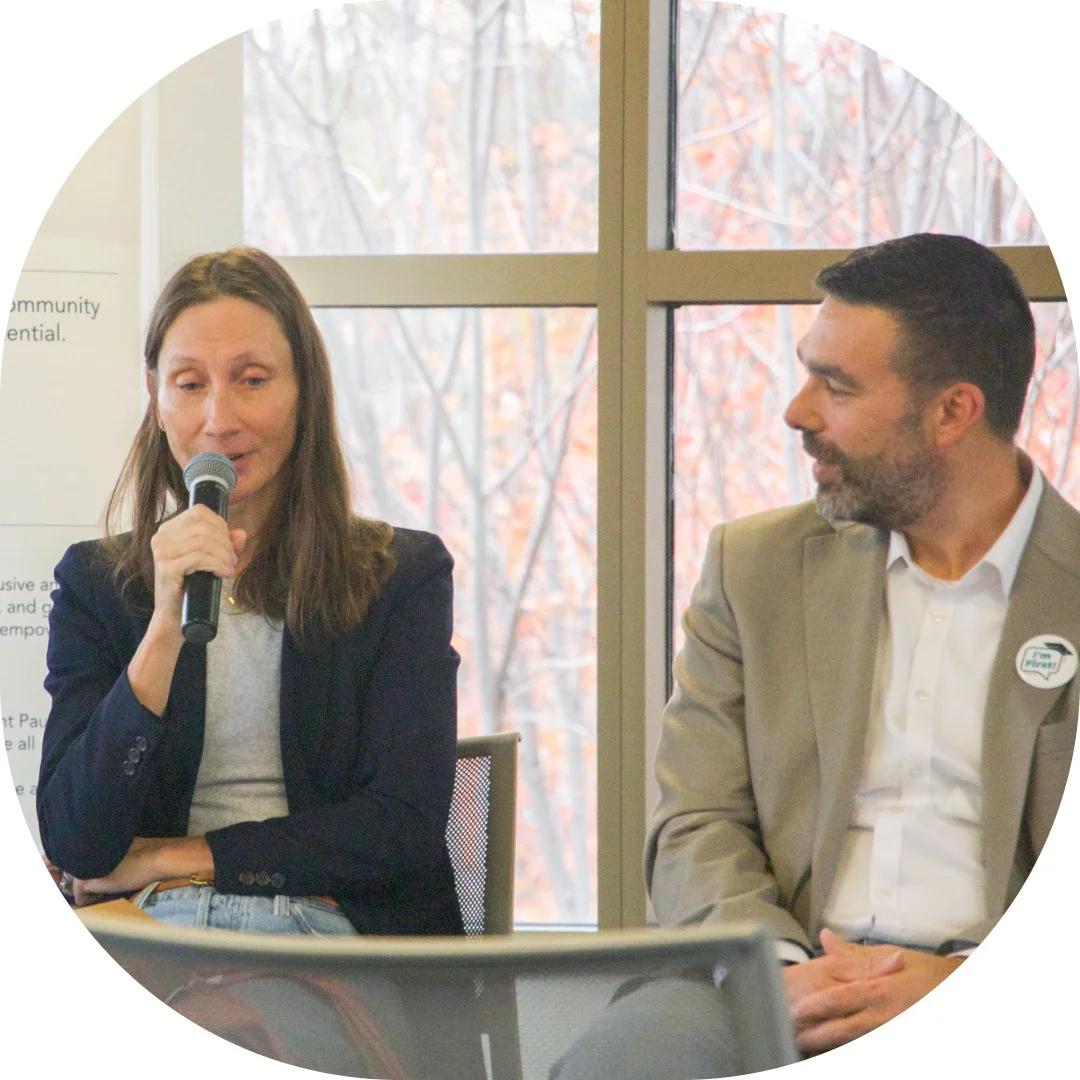
Earlier that afternoon, eight Saint Paul College faculty and staff members sat shoulder to shoulder on the west side of the fourth-floor skyway, ready to discuss their experiences as first-generation students and the journeys that led them to where they are today. Moderated by Mela Shah, director of TRiO Student Support Services, the panel explored what inspired them to pursue higher education, the challenges they faced along the way, and the advice they would offer current students.
A Different Future
As the microphone moved down the line of speakers, a common theme emerged. For many panelists, college represented an opportunity to build a different, and hopefully better, future.
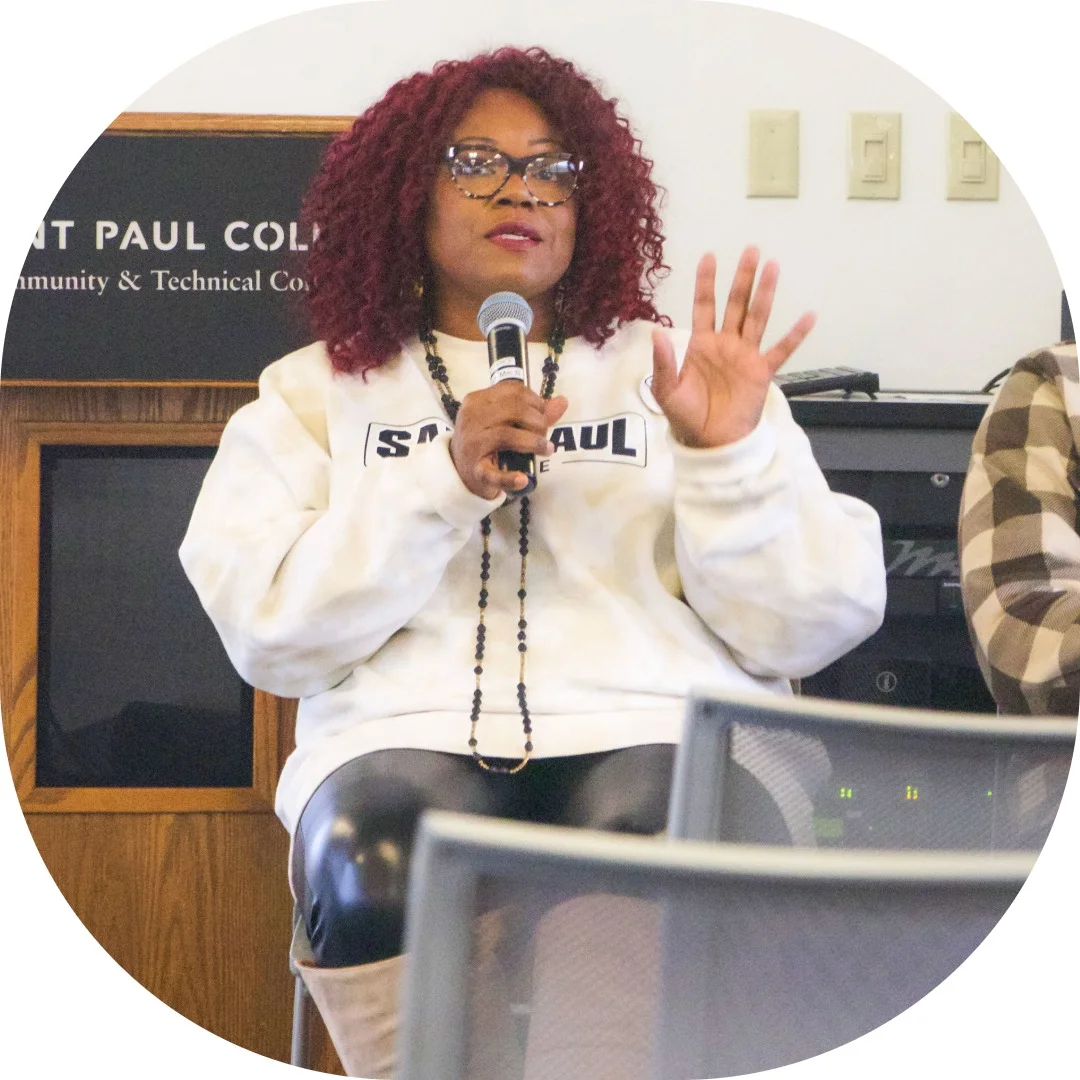
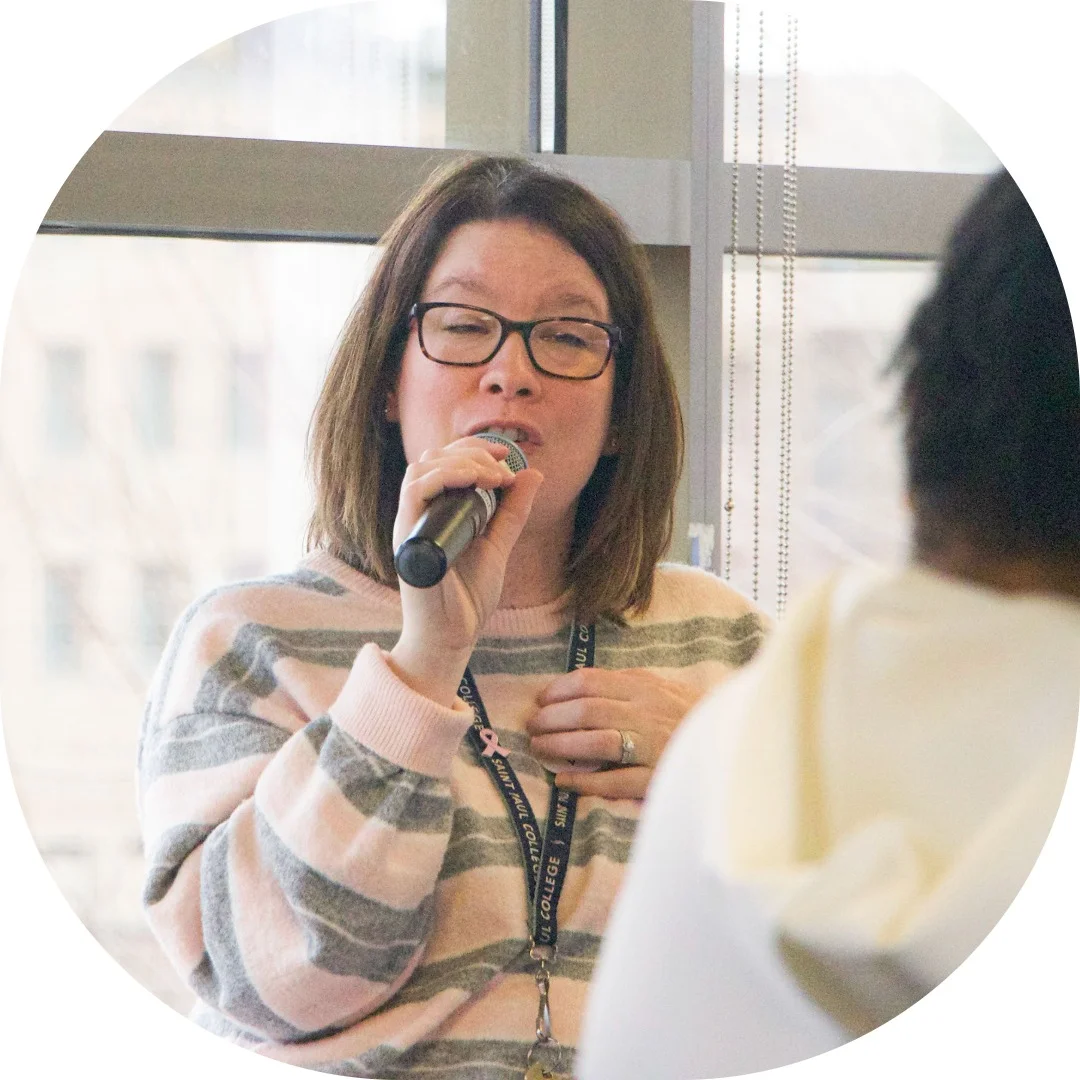
Darnita Richardson Young and Michelle Britton shared how witnessing financial hardship and limited opportunities within their families motivated them to pursue higher education.
For Wendy Roberson, vice president of Diversity, Equity, and Inclusion, a turning point came during high school in Flint, Michigan. A teacher told her she needed to make better choices or risk ending up “dead or in prison.” Rather than accepting that prediction, Roberson used it as motivation. The comment fueled her determination to pursue an education and create her own path.
Carla Gonzalez, director of Academic Support, described growing up in a Latine community where many women had little financial independence. School became a place where she felt confident and capable. College offered opportunities she could not find around her, and she chose to pursue them.
Learning Through Challenges
The panelists made it clear that getting to college was only the beginning.
Several shared stories of changing majors, making mistakes, and finding their way through trial and error. Greg Rathert and Darnita both laughed about starting in meteorology before realizing it was not the right fit.
For Derek Arrowood, a biology fellow in the Science Study Center, community played an important role. Growing up in a small town, supported by farming and industrial work that was slowly collapsing, he was expected to go to college to build a better life. While he struggled to connect with more privileged students, he found encouragement through fellow scholarship recipients and students from similar backgrounds.
Gonzalez spoke openly about the pressure she felt as she neared graduation and later defended her dissertation. Therapy, support, and perseverance helped her move forward.
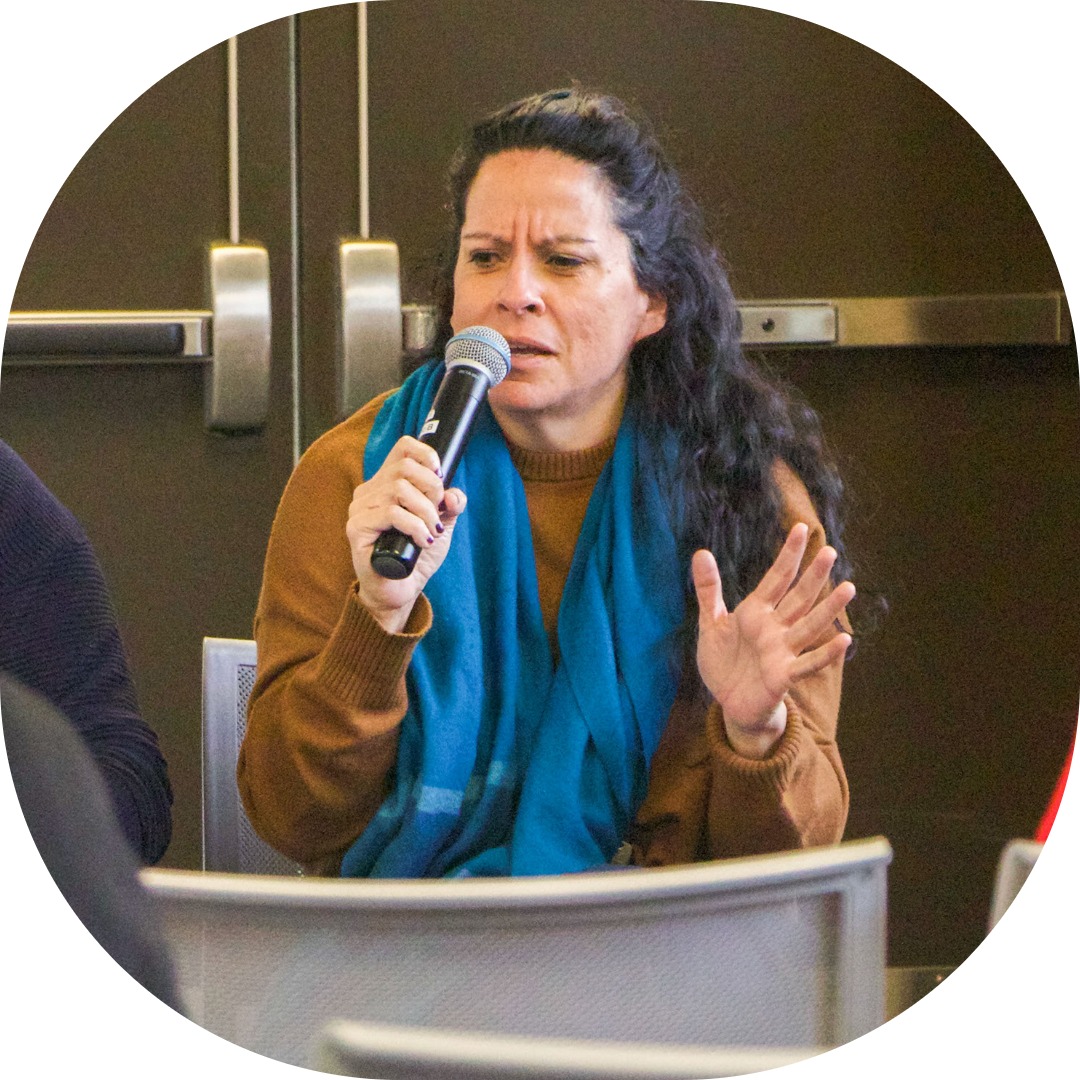
“It gets easier each time you get through it,” Gonzalez said. “Nothing is more satisfying than getting a degree.”
Advice for Students
When asked what advice they would give current students, the panelists stressed the importance of making connections and asking for help.
Communication instructor Shelby Reigstad encouraged students to speak up and advocate for themselves. Alex Lucier, director of Access & Disability Resources, emphasized the importance of building relationships with advisors and using available resources.
Michelle left students with a final reminder:

The door to your education is never closed.
Their stories showed that success is not about a perfect timeline. It is about persistence, growth, and celebrating every step forward.